Language 🌐🇬🇧 🇹🇭 🇰🇷 🇯🇵 🇫🇷 🇪🇸 🇩🇪 🇹🇼 🇮🇹 🇵🇹 🇸🇦

DTV Visa Requirements

วีซ่า DTV ใช้เอกสารอะไร บ้าง

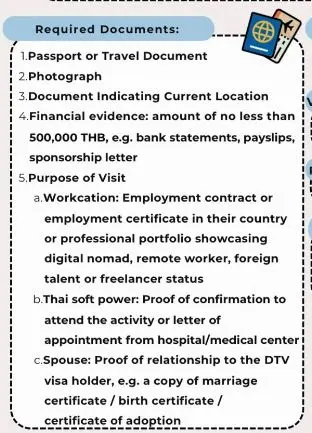
Let’s go into the details of each required document.

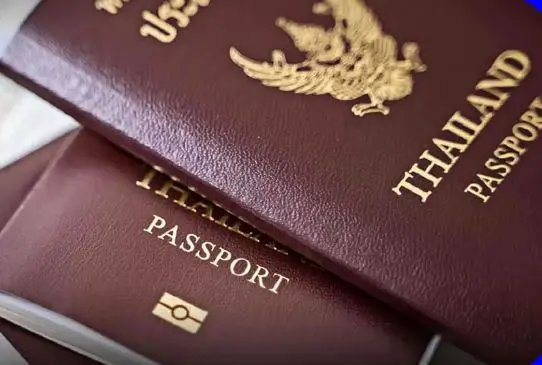
1. Passport

Your passport must be valid for at least six more months when you apply for a visa. If it isn’t, the embassy might reject your application right away.

We always recommend that our customers make sure their passport has at least one year of validity.

If the DTV visa is issued in a passport that expires soon, you will need to visit the immigration office to transfer the visa to your new passport, which takes extra time.

To avoid this hassle, we suggest using a passport with enough validity from the start. This way, you won’t need to deal with transferring the visa later.

If you hold more than one nationality, you should consult with us to see which passport gives you a higher chance of getting DTV approved.

2. Photograph

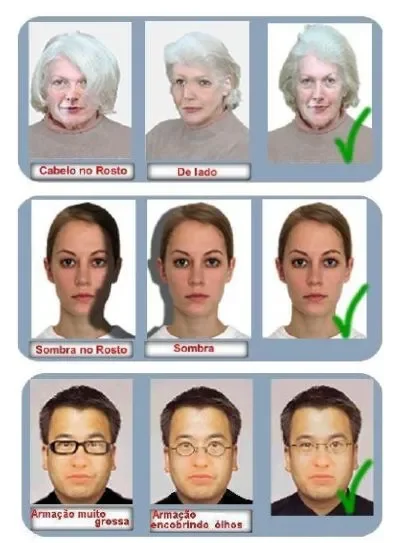
Photos submitted for visa applications must be taken within the last 6 months and meet the standards set by the International Civil Aviation Organization (ICAO).

– Must be a full-face view, with a slight smile allowed (no teeth visible).

– The background must be white, with no shadows or glare on the face or background.

– Hair must not cover the ends of both eyebrows.

– No contact lenses, hats, headbands, or non-black hairpins are allowed.

– If wearing glasses, the frames and lenses must be clear. Both eyes must be fully visible, with no obstructions.

3. Money in Bank Account

1. 500,000 THB Requirements
  • Minimum 500,000 THB (approx. 16,000 USD / 14,500 EUR) in a savings or checking account only. Not accepted: business accounts, stock accounts, securities accounts, cryptocurrency accounts
  • Account holder’s name must match the passport name
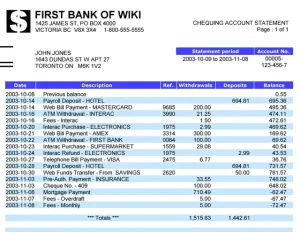
  • Balance date must be within 7 days before submitting the visa application
  • Financial proof must be an official bank document in:Thai, English, or The local language of the country where you apply (e.g., Japanese in Japan)
  • Do not use mobile screenshots or photos of a screen
  • If using a sponsor’s account (parent or spouse only): Include a sponsorship letter that provide proof of relationship (birth certificate or marriage certificate)
  • Each Thai Embassy may require different financial documents from those listed above. If you choose to use our Visa Assistant service, we can advise you in advance about the specific documents your embassy is likely to request.  
2. Translation & Notarization
  • If you apply outside your home country, financial documents may need: Translation into English, and Certification by a government agency in your home country
  • Notarization rules are different for every country
3. Bank Statement History Requirement
  • When the DTV visa first launched, there was no rule on how many months of bank statements to show
  • Because of this, many applicants tried to borrow a lump sum from friend just to show 500,000 THB and withdraw the money once Visa is approved

Now, embassies require:

  • At least 3 months, sometimes up to 6 months, of bank statements
  • Each embassy has its own rules for: Ending balance, Average balance, How to convert foreign currency to THB
Please contact us so we can check your embassy’s latest requirements.
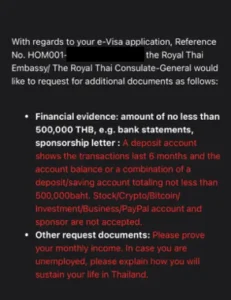
4. Why Embassies Are Stricter Now

Embassies now want stronger proof of funds. Even under Soft Power (Muay Thai), they want to be sure:

  • You did not borrow the money
  • You are not misusing the Soft Power category to get the visa
  • Applicants who choose very cheap Muay Thai courses are often asked for extra documents, such as: Tax returns, Past employment history, 1-year bank history with salary transactions highlighted
  • These unusually cheap softpower packages are a red flag for embassies, so they check these applications very strictly. Applicants who choose longer programs from well-known gyms like FITFAC usually face less scrutiny.
5. Before You Choose an Embassy

Different embassies = different rules.

Before you decide where to apply: Contact us to check the latest financial requirements for your embassy or even let us handle all of your Visa process for a price less than a a cup of coffee per month(on average for 5 years visa)

4. Proof of current location

Why Proof of Current Location Is Required for the DTV Visa
  • Since early 2025, all Thai visas must be processed online.

  • Embassies can no longer confirm your physical presence in person.

  • In the past, visiting the embassy served as natural proof of location—no entry stamps, hotel bookings, or phone location were required.

  • Now, applicants must provide proof of their current location to ensure they are applying within the correct jurisdiction and are legally present in that country.


What Happens If You Apply From Thailand but Claim to Be Abroad?
1. You might appear to get away with it temporarily.
  • The embassy may not notice immediately.

  • Unethical agents sometimes encourage this behavior.

2. But the systems are fully interconnected — and detection is easy.
  • Thai E-Visa, Immigration, and TDAC systems are fully synced.

  • Embassy staff can see if you have not left Thailand.

  • Your application will be rejected and you may be blacklisted by:

    • Thai Immigration

    • Thai embassies worldwide

Additional risk: in-person interview
  • In suspicious cases, the embassy may ask to see your physical passport.

  • If it shows no entry stamp before your application date, your visa will be rejected and you may face global blacklisting.


Proper Ways to Apply for the DTV Visa
1. Travel to a neighboring country of Thailand
  • Exit Thailand legally and obtain valid proof of your current location.

  • Meets jurisdiction requirements and avoids complications.

2. Return to your home country
  • The most transparent and secure option.

  • Approval is generally easier in your home country than in neighboring countries.

3. Apply from your home country before traveling
  • The safest, cheapest, and simplest method—especially when using our free guide.

  • Ideal for securing a 5-year DTV Visa with minimal risk.


Proof of Current Location Documents
Proof of location for applicants applying in their home country:
  • Driver’s license

  • Utility bills in your name (telephone bill, gas bill, or internet bill with your address and your name matching the passport)
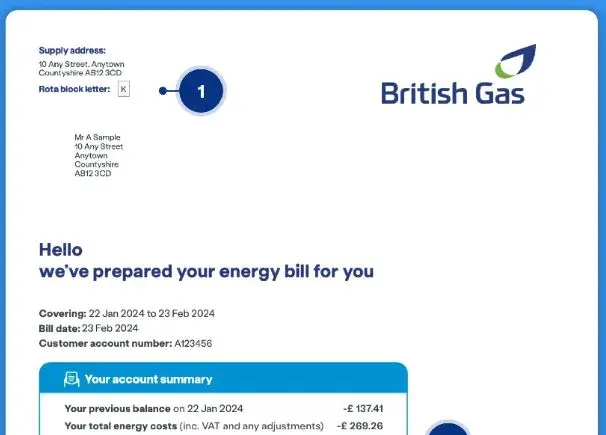
 
Proof of location for applicants applying outside their home country:
  • Proof of accommodation booking or payment

  • Flight ticket

  • Entry stamp

Please note: Each Thai embassy may require different types of proof of location. For example, some embassies do not accept entry stamps alone or hotel bookings for applicants who are not legal residents of that country.

Therefore, please make sure you verify the specific requirements of the embassy you are applying through before paying the visa fee, or you can use our visa assistance service to help you.
5. Supporting Documents for purpose of Visits

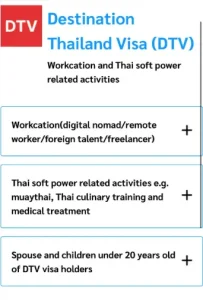
When applying for the DTV visa, applicants must choose one of the following three purposes:

– Workcation/ Freelance/ Digital Nomad
– Softpower (Muaythai/ Cooking School/ Medical Treatment)
– Spouse and Children

Applicants are required to submit supporting documents specific to their chosen purpose.

If you apply under the Workcation, Freelance, or Digital Nomad category, you must clearly explain to the embassy:
  • What type of work you plan to do in Thailand

  • How much income you expect to earn

  • What evidence shows you can genuinely perform this work online

You should be able to explain these points clearly in under five minutes, as if you are speaking to someone for the first time.

Your chance of approval depends heavily on how strong and credible your documents are.

If you provide solid evidence—such as employment with a reputable online company, a valid remote-work contract, and clear income records (e.g., tax returns or bank statements showing around 70,000 THB/month)—your chances of approval are much higher than if you provide unverifiable or anonymous income with no tax history.


Extra Complications for Workcation Applicants

Workcation applications can also become more complicated because each embassy may require different levels of documentation.

For example, even if you work as a programmer for a major company like Facebook, some embassies may ask for unusually strict proof, such as:

  • A letter signed by a top executive (even someone like Mark Zuckerberg)

  • The passport or ID of the company’s CEO

  • The company’s annual report (history, mission, competitor analysis, etc.)

While this may seem excessive, it shows how strictly some embassies verify authenticity.


Complications When Applying Outside Your Home Country

Things can also become complicated if you apply outside your home country.
For example, if you are from Spain and choose to apply in Vietnam, you may need to translate all of your documents into English and pay a lawyer to notarize each one.

Many embassies outside your home country also require stronger proof of residence and stricter documentation, which can make the process more expensive and time-consuming for you.


Based on FITFAC’s extensive experience 
Here are the recommended documents you should submit for Workcation DTV:
Introduction Letter :

– A self-introduction covering your name, age, education, current employment, annual income, and reasons for choosing Thailand for long-term remote work.– Include supporting documents, such as certificates or work portfolios, as evidence.

Educational Documents :

– Academic certificates (e.g., diplomas).

– Employment Verification

– LinkedIn profiles, resumes, or employment records.

– A letter from your employer allowing remote work from any location.

Proof of Income :

– Salary slips or official income verification.

Tax Documents :

– Recent tax filings or tax refund requests.

For freelancers :

– Include screenshots showing income earned on these platforms.

– Provide previous work samples for clients, compiled into a PDF for submission.

If you believe that your documents are strong enough to convince the embassy and you do not want to train Muay Thai, you can use our visa assistance service to prepare your case. We will review and revise your documents, submit your application for you, and refund 100% of our fee if your visa is rejected.

Many visitors come to Thailand to enjoy our food, beaches, and Muay Thai—not to work. Since some may not have strong work documents for the DTV Workcation visa, the government created an alternative option: DTV Soft Power.
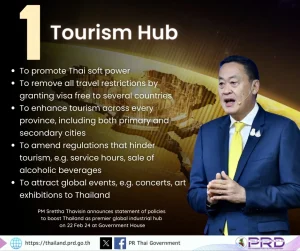
By combining the DTV Visa with Muay Thai enrollment, Thailand aims to attract high-wealth visitors, boost tourism spending, and promote our national sport to the world.

So if you want a 5-year DTV Visa but don’t have remote work to qualify for the Workcation route, enrolling in a Muay Thai program can also make you eligible.

What Muay Thai documents are needed for the DTV Visa?

You must enroll in a government-certified Muay Thai gym.

There are two types of official certification:

  • Ministry of Education (FITFAC holds this certification)

  • Board of Boxing Sport (FITFAC also holds this certification)

Reputable gyms such as FITFAC in Bangkok, Fairtex in Pattaya, and Tiger Muay Thai in Phuket all carry both government certifications.

The length of your Muay Thai course also affects your chance of approval.

From our experience:

  • 1-month courses almost always lead to rejection for the 5-year DTV Visa (around 99% rejection rate).

  • 6-month courses may result in the embassy issuing a different visa, such as a 6-month Multiple Entry Tourist Visa (METV), which actually makes sense based on the course length.

  • 9-month courses appear to be the safest option. This duration helps your application stand out from typical “visa mill” DTV applicants, who usually apply with only 3–6-month programs.

So to conclude, here are the documents you should have to safely apply for the DTV Visa:

  • Muay Thai school certification
  • Certificate of standard Muay Thai gym
  • Business registration of the gym
  • Letter of acceptance (the longer the course, the better)
  • Invoice or proof of payment
  • Thai owner’s ID that matches the information on all certificates

Optional documents (sometimes requested by embassies):

  • Training plan (required by some embassies)
  • Photos of your past Muay Thai training experience
  • Letter of confirmation from the Board of Boxing Sport to the consular office (we receive this request occasionally)
  • Photos of the gym
The documents are extensive. Some agents may promise easier approval with fewer papers, but based on our experience, the process is getting stricter over time. When it comes to visas, providing more supporting documents is always better than less—otherwise you risk additional document requests and longer waiting times.
Bringing Your Spouse or Dependent Under the DTV Visa

The DTV Visa allows applicants to enjoy long-term stays in Thailand through Soft Power activities such as Muay Thai training or through the Workcation category. Many applicants want to bring their spouses or dependents with them, and the good news is: the DTV Visa provides a pathway for immediate family members to accompany the main applicant.


Who Qualifies as a Dependent?

Under the DTV Visa guidelines, the following family members can be included:

  • Spouse (legally married)

  • Children under 20 years old

Each dependent must submit their own application, but it is linked to the primary DTV applicant.


What Documents Do Spouses or Dependents Need?

To support their DTV application, spouses and dependents must prepare:

1. Proof of Relationship
  • Marriage certificate (for spouse)

  • Birth certificate (for children)
    These documents may need to be legalized or notarized depending on the embassy.

2. Financial Proof

Although dependents do not need to show work documentation, some embassies require:

  • Bank statement of the main applicant, or

  • Family financial proof

This shows that the family can support themselves during their stay.

4. Main Applicant’s DTV Supporting Documents

Dependents must submit copies of the main applicant’s documents, such as:

  • Proof of Muay Thai enrollment or Workcation eligibility

  • DTV acceptance letter

  • Proof of payment

  • Gym or employer certification (if relevant)

This confirms that the dependent is directly attached to the primary DTV holder.


Important Notes About Approval Chances

Just like the main applicant, dependents must submit clear and complete documents. Missing or unclear relationship documents often lead to delays.

From our experience:

  • Marriage certificates must be official and correctly translated.

  • Children’s documents must clearly show the parental relationship.

  • Additional proof—such as family photos or household registration—can help in unclear cases.

When it comes to dependents, more documents are always better than less to avoid extra embassy requests and long processing times.

Next step?

If you think you’re ready to apply for the DTV Visa, let’s move on to the next section: how to start the process.

Please keep in mind that requirements change frequently, and this website may not always be fully updated.

Before proceeding with your DTV application, make sure to contact us directly for the most accurate and up-to-date information. Lastly, do not rely on ChatGPT for your visa application—its information may be incorrect, and submitting the wrong documents could lead to your visa being rejected.
WhatsApp LINE Email